Year:
Duration:
Recorded:
                                 bird flight

                                     the wire

                                          and its shadow

                                             across the street
Larry Eigner
June 17 82
Windows / Walls / Yard / Ways
Black Sparrow Press, 1994
Some Comments and Anecdotes
It’s all very well looking at beautiful, close-up photos or footage of birds; or illustrations of them in bird guides – all such incredibly mediated, abstract representations of birds.
Our physical experience of birds, leaves a very different impression. 1
As a child I once asked my grandfather the name of a small bird that had alighted on a branch in a tree near us.
Without hesitating he said: “It’s an LBJ.”
Before I could excitedly ask what that meant, he muttered: “a Little Brown Job.”
Even in my childlike inquisitiveness, I understood the undeniable, physical truth of that statement. There was no way that we were going to get close enough to it to properly look at it. 2
I can generalise our physical experience of birds as follows:
Birds always keep far away from us, and fly away when we approach.
Birds are mostly small, which makes them even harder to identify.
Birds are very twitchy, and fly off very often – not leaving any time to properly observe them.
But birds are quite loud – which makes them easy to hear and identify.
In fact, if you think about it, they exist to us mostly on the auditory plane…
I challenge you to walk outside and try to see every bird you hear.
While bird calls make up a noticeable part of our auditory backdrop; our sightings of them and their movements, can most often only be described by words such as dots and furtive; or darting, flashing, zipping, streaking, whisking, dashing, diving, fluttering, swooping, streaking, swishing or shooting past.
Ironically, it is those flashes of movement that makes us notice them – but then only ever as generic – “birds.”
The poet Larry Eigner spent most of his life confined indoors – looking at the world through his windows. His extraordinary body of work – which is one of my favourite recent discoveries – is replete with mentions of birds in exactly the ways I have described above.
Our experience of them is so momentary, so fleeting, that trying to describe the experience inevitably ends up being Haiku-like.
Of all the birds in most of our urban lives, the much-maligned pigeon must rate as the most common.
This humble bird flies at normal speeds between forty and sixty miles per hour – and is capable of bursts up to ninety miles per hour!
In a built-up urban environment, these speeds ensure only glimpses of them flying before disappearing behind buildings or trees.
About the Video
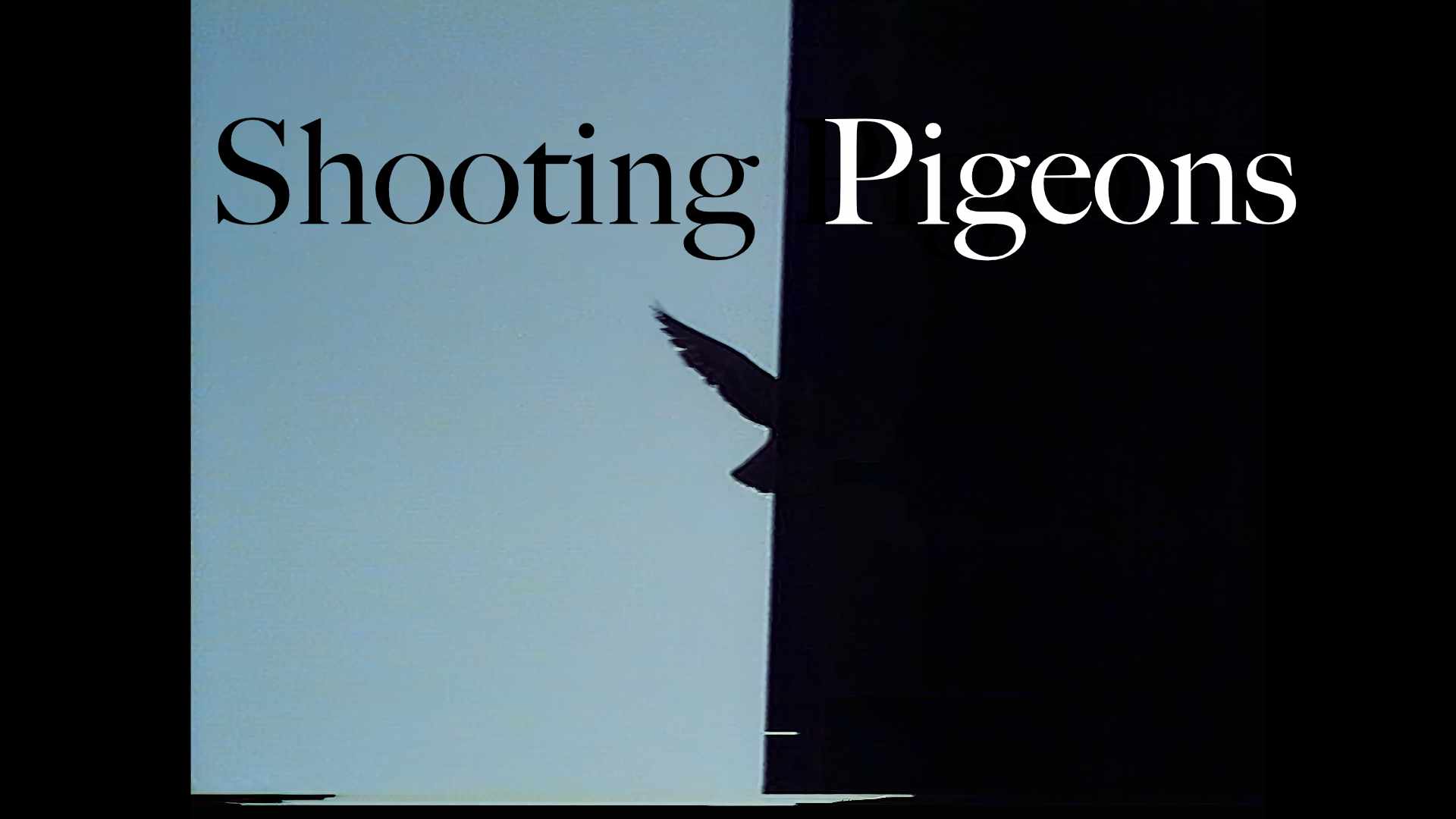
In 1990, on a winter’s day in Newtown, Johannesburg; I found myself on the railway tracks near some grain silos on the adjacent block.
While testing out my first video camera 3, I noticed the many pigeons that had been attracted by the spillage of grain near the silos.
It was then that I was inspired to try and record them in flight – an enterprise that ended up comical in its ineptitude.
After many attempts – hopelessly thrashing the camera about trying to keep flying pigeons in frame; I gave up despondently.
In 2026, while reviewing my analog video archive, I rediscovered this sequence of my attempts at shooting pigeons.
I was excited by the rhythms of the extreme movement of the camera and its subject matter – something that I’ve explored many times in subsequent videos 4.
Although unintended, this sequence ended up being my first exploration of that approach to camera and image.
To retain the purity of form and subject, I’ve left the sequence exactly as recorded on the original S-VHS tape.
The only edit I’ve made, is the final shot leading up to the final frame… After thirty-six years of lying dormant on magnetic tape, I discovered the serendipitous few frames of the pigeon drawn on the opposite wall – something that I never noticed while recording… as so many things on my videos.
For the sake of completion, I must add that in 2026 I digitised the video, de-interlaced it, and then upscaled it to 1080p HD.
About the Music
During the 1980’s, I taught myself to program my Sinclair ZX Spectrum computer.
In the late 80’s, I was obsessed by the idea of synaesthesia, and the possibility of using the computer to convert sound to image or number – and vice versa.
As member of the group Vache Noire, we were also interested in self-generating music – that follows some algorithm or set of rules. 5
While trawling through my archive for potential music to use for this video, I stumbled across an audio cassette from 1988 – containing some of my above-mentioned computer experiments.
I forget the algorithm that I programmed to create this music, but I feel it suits the images exactly because it runs counter to their dynamism.
Birds, after all – like all the ten thousand things around us – don’t exist to entertain us… they simply are, and do what they need to do.
This is something that I feel the music – in the way that it was algorithmically generated – innately embodies.
I was stunned by the way sound and image synchronised when I first lay the audio on the video timeline. The only audio edit I made was during the appearance of the Pied Crow 6 that lands on the grain silo.
In conclusion
I started recording this video with some sort of abstract concept of capturing the lyricism of birds in flight.
Instead, I ended up running headlong into the wall of the concrete, matter of factness of birds as they physically appear to me; as I make contact with the world and the physical limits of my body and my tools – the “Curing Concrete” – as I call it…
Konrad Welz, 23 August 2026
Post Script
In case you enjoyed this video, I have made many videos that are similar in spirit. Some of these are:
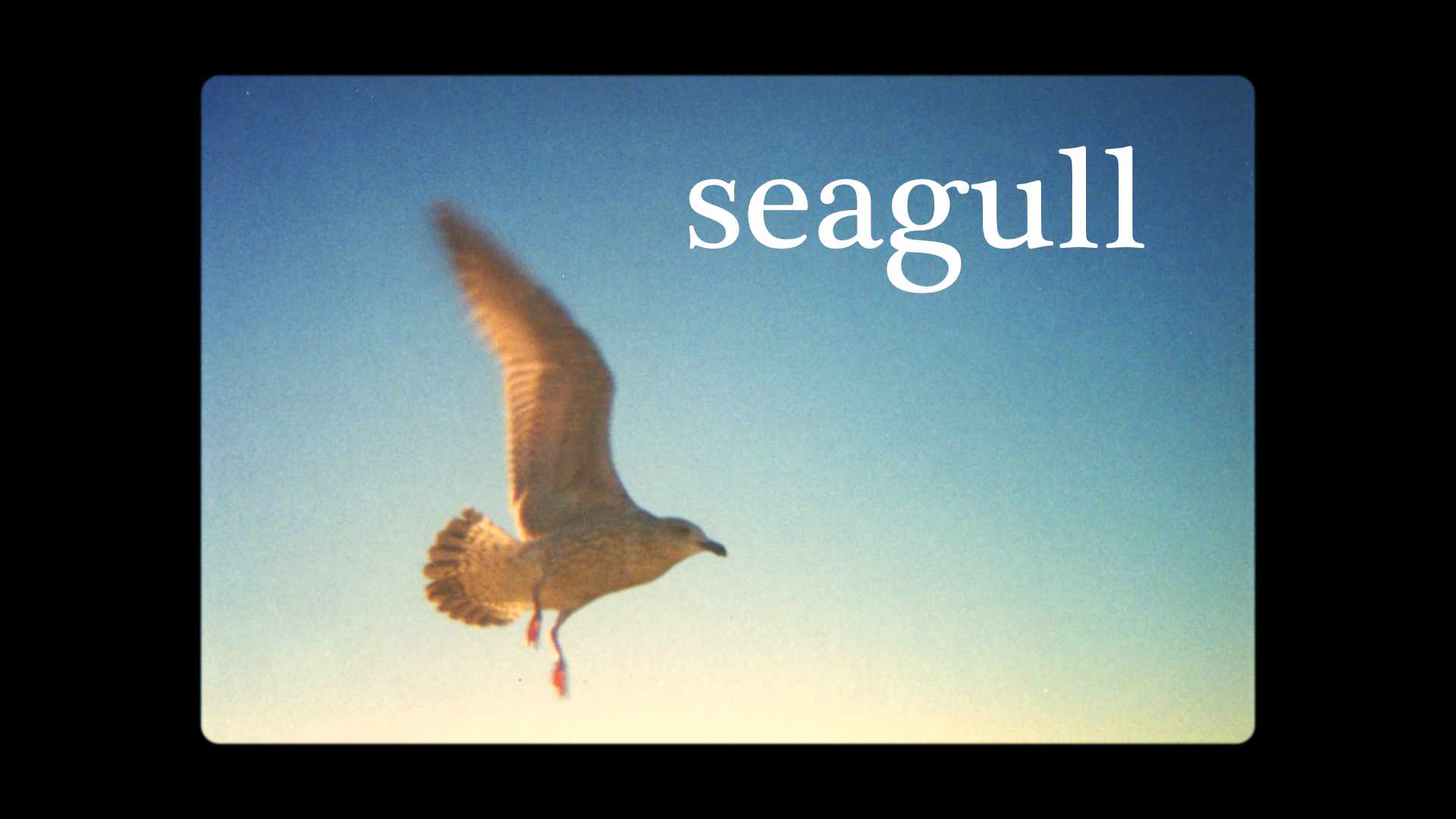
Seagull, Torresian Imperial Pigeon, Kites, and Summoning.
Similarly, I have made many videos exploring the movement of a camera through space. These include:
Concrete Painting and Contact
Footnotes:
1: Of course, this applies to all of the ten thousand things in the world. (return)
2: With his trademark, deadpan realism, artist-photographer Stephen Gill’s book – A Book of Birds – beautifully illustrates that point. (return)
3: It was a JVC GR-S505 S-VHS-C Camcorder. (return)
4: My interest in gestural video – and the idea of the camera as paint brush – is to be found in many of my videos. See the Post Script above. (return)
5: At the time we were unaware of the concept of Cellular Automata. (return)
6: In Afrikaans, the Pied Crow is know as the Witborskraai – made immortal in the children’s song “Aai Aai die witborskraai.” While searching the internet for an image of this bird that I love so much, I stumbled across a dance remix of the song that I would love to share. (return)